Hang gliding Elementary Pilot and Club Pilot: your school course
What a BHPA hang gliding school course covers, from the Elementary Pilot award to Club Pilot (Novice), and the school rules on kit.
In this guide
- What it is: The BHPA's first award (EP) and first rating (Club Pilot, Novice) for hang glider pilots, both earned at a registered school.
- What you need first: Nothing but a first session at a BHPA registered school. You must be 14 to fly solo or hold a rating, and many schools set their own limit of around 16.
- What you'll learn: Ground handling, take-off and landing, then solo flights from a hill, a winch or behind a tug, depending on the school.
- How long it takes: The BHPA doesn't set a number of days. Your Student Training Record sets the level you need to reach before you move on.
- Cost: Elementary Pilot plus Club Pilot is usually £1,300 to £1,600. BHPA membership is extra: £120 for 3 months' Trial Membership, or £192 a year plus a £35 joining fee. Your CP rating is £20 (BHPA fees from 1 April 2026).
- What's next: Pilot track: Pilot and Advanced Pilot. Coaching track: once you've logged 10 hours (hill) or 50 flights (tow) as a CP, the Club Coach course.
How it works
The BHPA puts every pilot down by three things: the craft (hang glider), the rating, and the environment, meaning how you launch. Your course ends with Club Pilot (Novice) plus whichever environment you trained in: Hill, Tow, Aerotow or Power.
- Elementary Pilot (EP): your school gives you this once you've finished the introductory phase. It shows you're ready for the rest of the course.
- Club Pilot (Novice): the end of formal instruction. You can leave the school and fly without supervision in BHPA clubs, though you're still learning and should lean on club coaches.
There's one training record for hang gliding hill and tow, and a separate one for aerotow.
Once you have your EP, wear a red ribbon on the hill so experienced pilots know to look out for you and offer advice. It can come off when you reach CP plus 10 hours logged.
School rules that are only for hang gliding
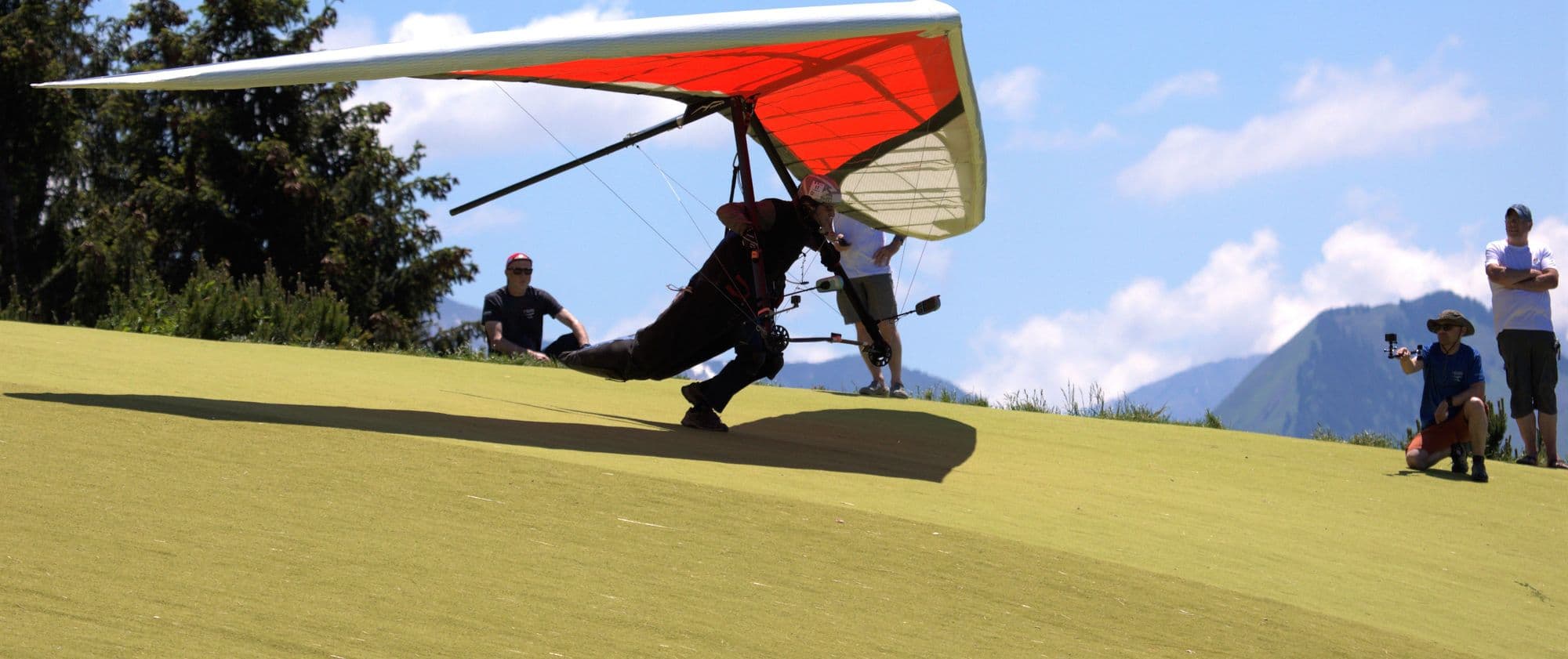
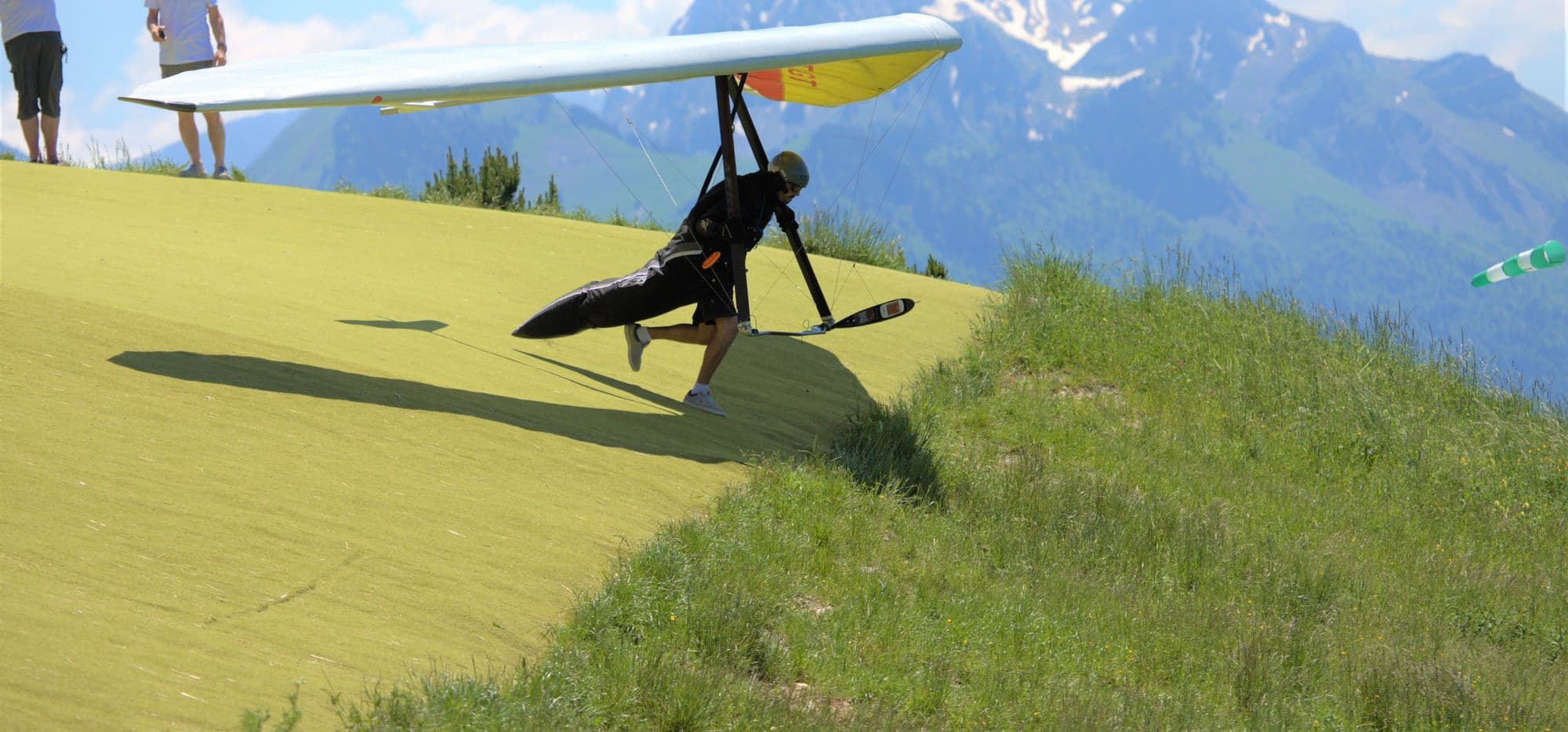
- Until you have your CP, your glider must have wheels at least 9 inches across on the control frame.
- Schools teach semi-prone only. Seated training isn't allowed.
- Early training is done without the stirrup. It goes on when you and the weather are ready.
- School hang gliders have to be certified by the BHPA, LTF or HGMA and marked with clip-in weight limits.
- Any change to a school glider, however slight, needs written approval from the maker or the BHPA. Taking the tip struts off, even for a while, counts as a change and isn't allowed, whatever kind of flight it is.
- On a hill, your first solo is on a slope only just steeper than the glider's glide angle. The wind must be 10mph or less for that flight. After that it should be 18mph or less, and no training at all happens above 25mph.
- For your first high solos there are two instructors, one at the top of the hill and one at the bottom (or one at take-off if you're on radio).
Changing launch method later
To add another environment, you take a short course instead of starting again. See launch environments. Switching to paragliding is different: the BHPA has no short-cut, so you train from the start. The only saving is that you don't re-sit Pilot or Advanced Pilot exams you've already passed.
Source: Pilot Rating Scheme, Registered Schools, Learn to Fly, BHPA Fees and Technical Manual (Amendment 24) (sections 1.3, 2.1, 2.5, 3.1, 3.2, 3.4.2 and 3.4.4), BHPA, checked October 2026.
Governing body: British Hang Gliding and Paragliding Association (BHPA). It sets the UK safety standards and training awards for hang gliding, so it's the official place to find out more.
Typical prices, checked October 2026. The club or coach sets and bills the price.
The club map lists some of the UK clubs for this sport. It is a starting point, so check with the club before you travel. To have a coach found for you, use the enquiry form.