Your first scuba course: what happens and how to choose one
Learning to scuba dive in the UK: try dives, PADI, BSAC and SSI entry-level courses, what training involves, medical checks and how to choose a course.
In this guide
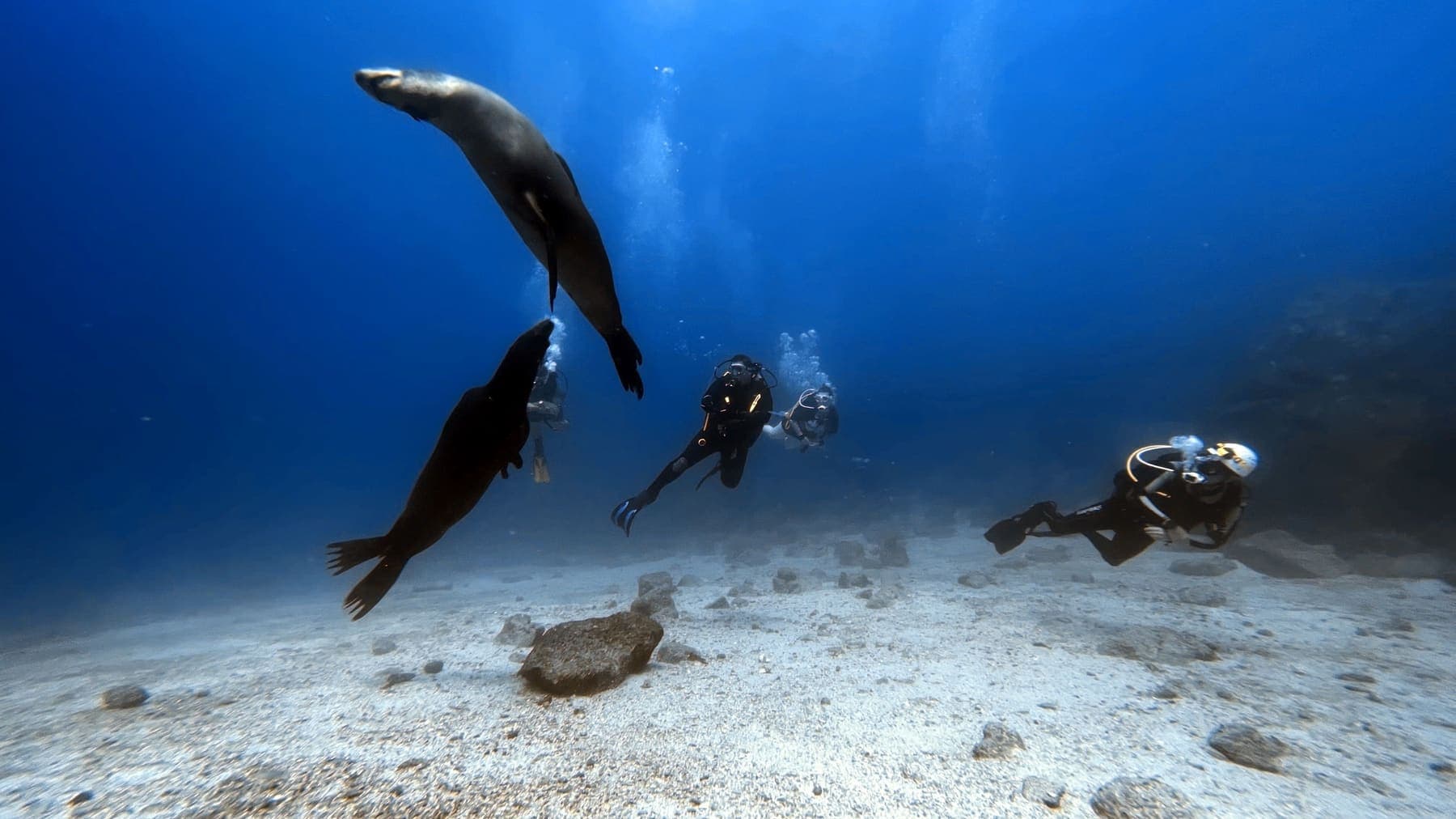
Scuba diving is breathing underwater from a tank, with an instructor beside you. Here's how to start.
Try it before you sign up
If you've never breathed underwater, a try dive is a great first step. PADI's version, Discover Scuba Diving, lets you try scuba in a pool or calm water with a PADI professional, who provides the gear and explains the basic skills. Many BSAC clubs run Try Dive sessions on request at their regular pool meetings: you'll get poolside tuition and then a pool dive with a BSAC-qualified instructor, after completing a medical form.
It's a low-commitment way to find out whether you enjoy it before paying for a full course.
The main entry-level courses
There are several training organisations, known as agencies. The ones you're most likely to meet in the UK are:
- PADI Open Water Diver. The minimum age is 10, and divers certified at 10–14 earn a Junior Open Water Diver certification. You'll study the theory (often as eLearning), then complete five confined-water dives and four open water training dives with your instructor. Once qualified, you can dive to 18 metres.
- BSAC Ocean Diver. The British Sub-Aqua Club's entry-level course is open to anyone from 12. It includes six theory modules, at least five pool or sheltered-water sessions and at least four open water dives, and qualifies you to dive to a maximum of 20 metres. It also introduces rescue skills and Nitrox (enriched air) from the start. From age 10, BSAC also offers a Discovery Diver course, with a 12-metre limit.
- SSI Open Water Diver. Scuba Schools International's course has a minimum age of 10, with six academic sessions, six pool or confined-water sessions, four open water sessions and a maximum training depth of 18 metres.
All three are recognised internationally. BSAC says its course teaches you to use basic dive gear, control your buoyancy, understand basic safety skills and plan your diving.
What happens on the course
Theory. You'll learn the principles and safety concepts behind diving, through eLearning or classroom sessions, with short quizzes and a final assessment along the way.
Pool (confined water) training. This is where you take your first breath underwater and practise skills, such as clearing your mask and controlling your buoyancy, in a pool or pool-like environment.
Open water dives. Finally, you'll repeat those skills on dives in the sea, a lake or a quarry with your instructor. BSAC notes that many UK clubs start open water training in quarries, which offer predictable conditions.
You'll also need to show you're comfortable in the water. PADI asks you to swim 200 metres (or 300 metres with mask, fins and snorkel) and float or tread water for 10 minutes. BSAC asks you to show you can comfortably swim 200 metres in a pool.
Medical checks
Before any in-water training, you'll complete a medical questionnaire. On a PADI course, if it flags a pre-existing condition, a doctor has to sign you off before you can get in the water. BSAC members complete a self-declaration medical form when they join and every year after; if you answer "yes" to any question, you'll need to contact a UK Diving Medical Committee (UKDMC) medical referee for advice. This self-declaration is a requirement set by the UKDMC. Answer honestly: instructors and dive shop staff aren't doctors, and only medical professionals can clear you to dive.
Dive centre or club?
In the UK, you'll usually choose between a dive centre and a club.
Dive centres are businesses that run courses to a schedule. BSAC says you can learn at one of its training centres in around five days.
Clubs, such as BSAC clubs, usually spread training over weeks or months. BSAC's instructors are volunteers. Once you qualify, you can join in regular club dives.
Neither is better. It depends on your schedule, your budget and whether you want a community to dive with afterwards.
Learning in the UK or abroad?
BSAC's Ocean Diver qualification is designed for diving both in the UK and abroad. Plenty of people learn in the UK; others start at home and finish somewhere warmer. With a PADI Open Water Diver referral, you complete the theory and pool training locally, then take your referral form to any PADI dive centre in the world within 12 months to do your open water dives. Ask your instructor what exposure suit (wetsuit or drysuit) you'll need for where you plan to dive.
How to choose a course
Before you book, ask:
- How big are the groups, and how many students does each instructor supervise in the water?
- Where do the pool sessions and open water dives take place?
- What equipment is included, and what will I need to buy or hire? PADI notes that most dive shops ask students to provide their own mask, fins and snorkel.
- Are there extra costs, such as site entry fees, eLearning or certification?
- What's the schedule, and what happens if I miss a session or the weather cancels a dive?
- What can I do after I qualify?
A good instructor will be happy to answer all of these and won't rush you.
Ready to dive in?
Our club map shows some of the UK's scuba centres and clubs. It isn't a complete list, so check PADI's and BSAC's own finders too. If you would like help finding a coach, ESP can match you. The fee is £29.99. Nothing is charged when you send the form. The coach's own fees are separate. We refund the fee if we cannot provide a coach, or if your health means you cannot train. If the student is under 18, we need a guardian's consent, we contact that guardian, and the guardian travels with them.