A beginner's guide to snowboarding in the UK
Never snowboarded? Where to learn in the UK, what happens in your first lesson, what kit to rent or buy, how to stay safe and how to keep progressing.
In this guide
Never strapped into a snowboard? You don't need to live next to a mountain to learn. Between indoor real-snow centres, outdoor artificial slopes and Scotland's ski centres, the UK has plenty of places to take your first slide. Here's where to go, what happens in your first lesson, what kit you need and how to stay safe.
What is snowboarding?
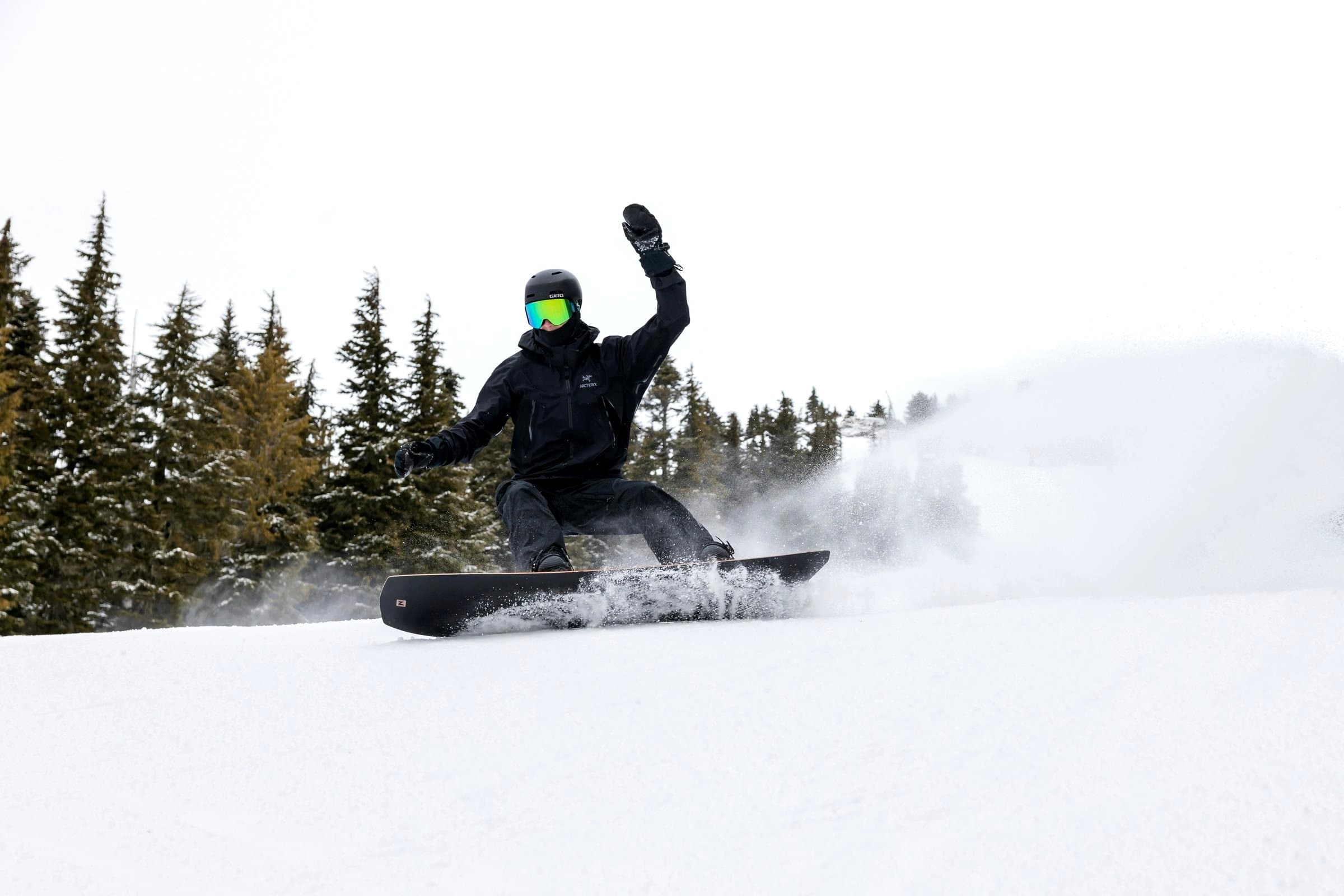
Snowboarding means riding down a slope standing sideways on a single board, with both feet fixed into bindings. The board has a nose (front) and a tail (back), and which foot sits nearer the nose decides your stance.
- Regular: left foot forward, right foot at the back.
- Goofy: right foot forward, left foot at the back.
Neither is "correct". It's simply whatever feels most natural to you. Not sure? Burton suggests sliding across a smooth floor in thick socks, or having a friend give you a gentle, unexpected nudge from behind: the foot that ends up in front (or steps forward to catch you) is most likely your front foot. Your instructor can help you check on the day.
Where can you learn in the UK?
There are three main ways to get started.
Indoor real-snow slopes
Indoor centres give you real snow all year round, whatever the weather outside. Two well-known examples:
- The Snow Centre Hemel Hempstead, just north of the M25, has a 160-metre main slope and what it describes as the UK's largest dedicated lesson slope.
- The Snow Centre Manchester has a 180-metre slope, which the centre says is the UK's longest indoor real-snow slope.
Dry (artificial) slopes
Dry slopes are outdoor slopes covered with artificial matting. The most common modern surface, Dendix, uses plastic bristles that are kept watered to cut friction. They're a handy, year-round way to learn, but falling on matting can hurt more than falling on snow and can scratch skin or tear clothing, so long sleeves, long trousers and full-finger gloves are a must.
One example is Midlothian Snowsports Centre at Hillend, near Edinburgh, which bills itself as Britain's biggest artificial slope. It runs two-hour snowboarding taster sessions for complete first-timers, covering equipment, posture and balance.
Scotland's ski centres
For real mountain snow without leaving the UK, Scotland has five ski centres: Cairngorm Mountain, Glencoe Mountain, Nevis Range, The Lecht 2090 and Glenshee. VisitScotland says all five have beginner-friendly slopes and offer lessons with qualified instructors, and describes The Lecht as ideal for novices. The season typically runs from December to April, depending on snowfall and weather, so always check each centre's conditions report before you travel.
Want to see what's near you? Our club map shows some of the UK centres that offer coaching, including snowboarding venues. It's a starting point rather than a complete list, so confirm details with a venue before you go.
Your first lesson
At The Snow Centre, the first adult group lesson (Stage 1) lasts two hours, with up to six people per group (ages 17+). You'll learn about your equipment and slope etiquette, practise moving with one foot strapped in, work on your balance and learn to side-slip on your heel edge. Expect to spend a fair bit of time sitting in the snow. That's completely normal in the early stages.
The Snow Centre asks you to arrive at least 30 minutes before your lesson to check in, collect your kit and get ready. Your snowboard, boots and helmet are included in the lesson. Norfolk Snowsports Club, a dry-slope venue, also supplies helmets, boards and boots as part of the session. Always check with your venue what's included before you book.
On indoor snow, wear warm clothing, a waterproof jacket and trousers, warm socks and gloves. At The Snow Centre Manchester, gloves are compulsory. On a dry slope, wear long sleeves, long trousers, long socks and full-finger gloves. Norfolk Snowsports Club won't let you on the slope without your skin covered.
Rent the board, buy the gloves
Boards, boots and helmets are included with lessons at many venues, so there's no need to buy a board before you've tried the sport. Gloves and warm socks are a sensible first purchase.
A helmet is required at many centres, and wrist guards are worth asking about. At The Snow Centre, helmets are compulsory for everyone on the snow, and you can bring your own or borrow one.
Staying safe
Beginner lessons are often led by a BASI Level 1 instructor or equivalent. The Snow Centre says that is the minimum for its beginner snowboard lessons. Ask to see the qualification.
Your first few sessions
The Snow Centre's beginner pathway gives a good idea of what to expect:
- Stage 1, the basics: equipment, slope etiquette, one-footed skills, balance and heel-edge side-slipping.
- Stage 2, movement and direction: using both your toe and heel edges to side-slip diagonally, and controlling your speed and direction on either edge.
- Stage 3, foundation turns: turning consistently on both edges and making basic turns down the full length of the beginner slope.
- Stage 4, developing: steering, linking curves together and learning to use a button lift.
Everyone learns at a different pace, but The Snow Centre suggests a complete beginner will need at least six lessons to feel comfortable and confident on the slopes.
If you would like help finding a coach, ESP can match you. The fee is £29.99. Nothing is charged when you send the form. The coach's own fees are separate. We refund the fee if we cannot provide a coach, or if your health means you cannot train. If the student is under 18, we need a guardian's consent, we contact that guardian, and the guardian travels with them.